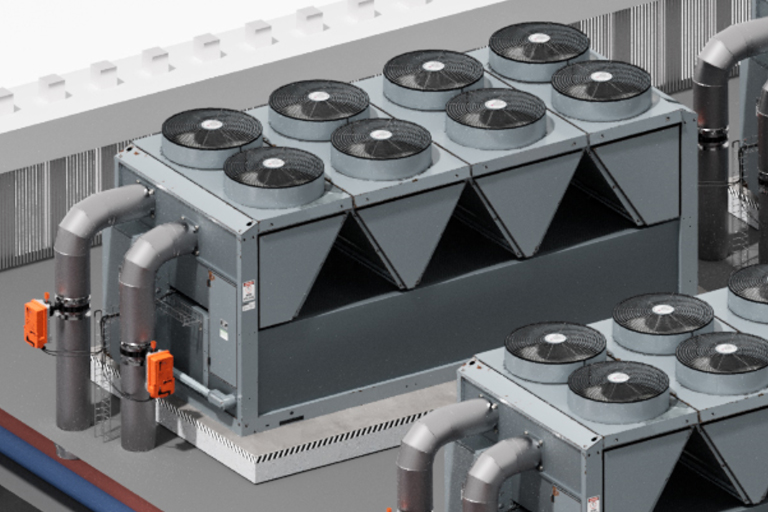
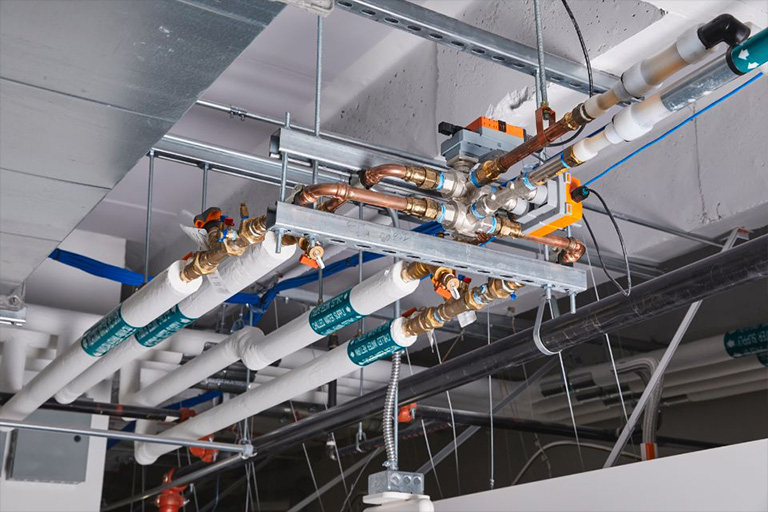
A hydronic heating and cooling system is only as good as its weakest control point, and in most systems, that point is the control valve.
Motorized valves regulate water flow to coils, and that flow directly determines how well a building delivers comfort and how efficiently the central plant operates. Understanding how control valves and the rest of the hydronic system interact is essential for designing, specifying, and troubleshooting systems that perform as intended.
Table of Contents
The Traditional Approach: Pressure Dependent Control Valves
Most legacy hydronic systems rely on pressure dependent control valves such as globe valves, standard ball valves, butterfly valves, and characterized control valves (CCVs). These valves are given the label of “pressure dependent” because the flow rate through them changes whenever the pressure differential (ΔP) across the valve orifice changes. In a real building, that pressure is rarely stable.
As other zones open and close their own valves throughout the day, the pressure available at any given valve rises and falls. When ΔP drops, flow drops with it, starving the coil. When ΔP rises, flow increases beyond what the coil needs, flooding it. Neither condition is good. An under-served coil can’t meet its load, and an over-served coil returns water to the plant that’s barely warmer (or cooler) than it started. This is a condition widely known in the industry as low delta-T syndrome.
Industry research on chilled water plants has found that when actual delta-T falls well below design delta-T, plants can waste a significant share of total energy. Some studies put the range as high as 15–40% of total chiller plant consumption through a combination of excess pump energy, premature chiller staging, and reduced usable plant capacity. Pump energy is especially sensitive to this because pump power scales with the cube of flow rate, so even modest overflow translates into a disproportionate energy penalty. On the plant side, the same overflow can trigger additional chillers to stage on well before their capacity is actually needed, degrading part-load efficiency across the board.
Balancing, coil sizing, the coil’s inherent response curve, and piping losses all interact, so a valve can’t be selected in isolation — the whole hydronic loop has to be evaluated together. When as-built conditions differ from the original design (as they often do after renovations or phased construction), even a carefully specified valve can end up mismatched to the system it’s controlling.
Combining Two Functions Into One: Pressure Independent Control Valves
Pressure independent control valves (PICVs), sometimes referred to as PI valves, address the root cause of the problem rather than compensating for it. A PICV combines a dynamic pressure-regulating (balancing) valve and a control valve in a single device, delivering the flow rate commanded by the control signal regardless of pressure fluctuations elsewhere in the system.
Because a PICV maintains an accurate, linear relationship between actuator position and flow across the full operating range, it eliminates the valve hunting and oscillation that oversized pressure dependent valves are prone to at the light-to-average loads where systems actually spend most of their operating hours. This also removes the need for a separate balancing valve or circuit setter at each terminal unit. PICVs typically require only a modest minimum pressure drop (often cited around 5 psi) to maintain dynamic balance, which is meaningfully less than what a pressure dependent valve and a separate balancing valve require in combination.
That lower pressure requirement has a quantifiable payoff in the form of lower pump head, less over-pumping, and lower energy cost. Because each PICV self-balances regardless of what’s happening elsewhere on the loop, direct-return piping arrangements become viable without the reverse-return piping traditionally used to force balanced flow — simplifying both design and installation cost.
Belimo’s line of Pressure Independent Control Valves (PICVs) and Energy Valve™ platform are built around this principle, integrating the balancing and control functions along with flow measurement in a single device so engineers and contractors don’t have to reconcile separate balancing and control specifications during design or commissioning.
Why the Whole System Has to Be Considered
It’s tempting to treat a control valve as a discrete component that can be specified from a catalog and dropped into a set of drawings. In practice, a valve’s performance is inseparable from the system around it: the coil it feeds, the pump curve supplying it, the piping losses between the plant and the terminal unit, and the balancing strategy used elsewhere in the loop. Every coil has its own response curve, and every process has its own control characteristics. There is no single valve design that performs identically across every application.
This is why accurate valve sizing depends on complete system data. When design documents don’t capture as-built conditions, or when a valve schedule is generated without a full hydraulic analysis, the result is often a valve that’s technically installed correctly but functionally mismatched to its system. Involving the design engineer when field conditions diverge from the original specification, rather than defaulting to a nameplate replacement, is usually the difference between a fix and a recurring service call.
Choosing the Right Control Valve for Your Hydronic System
Since no two systems are completely alike, Boston Aircontrols stocks an extensive lineup of Belimo products to perfectly match your engineering requirements. Here are a few heavy hitters you’ll want to know about:
Characterized Control Valves
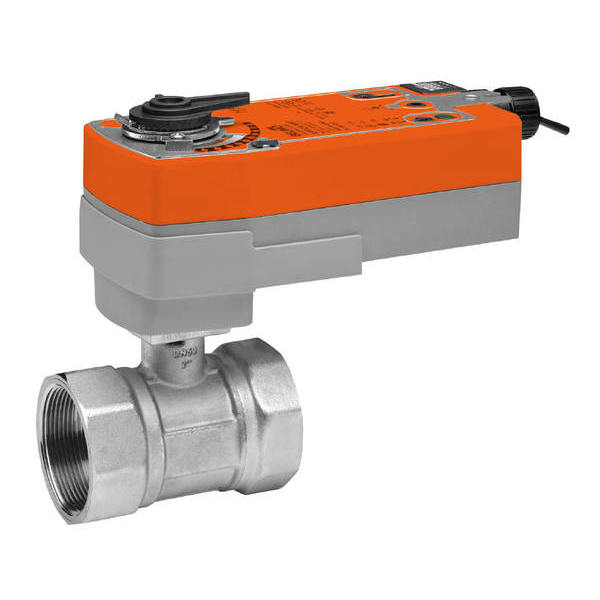
Since their introduction, Belimo’s CCVs have revolutionized the industry. These valves combine the zero-leakage, high close-off capabilities of a standard ball valve with a specialized disc that ensures an equal percentage flow characteristic. They are incredibly reliable, bubble-tight, and perfect for air handlers and fan coil units.




Pressure Independent Control Valves
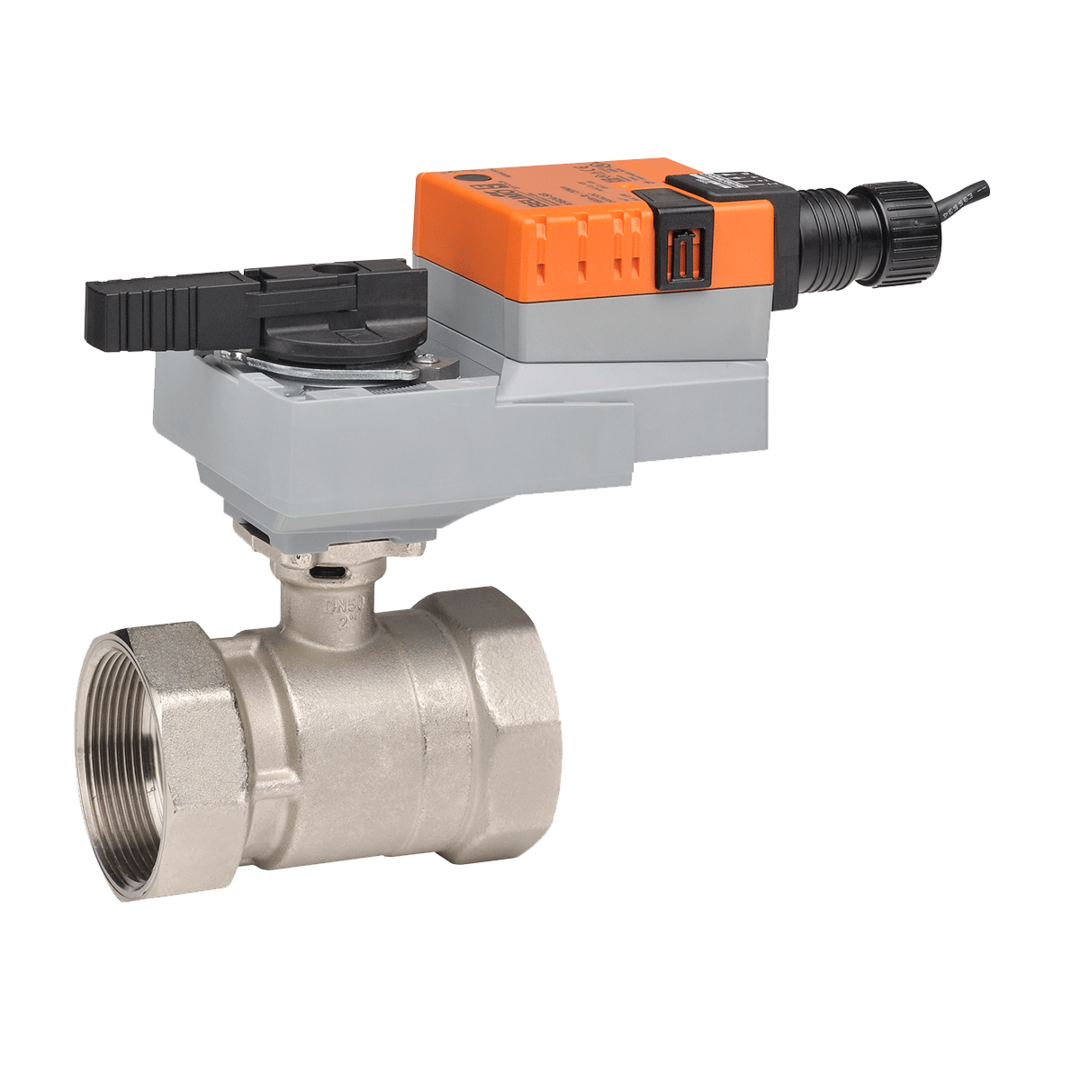
Pressure fluctuations in hydronic systems can throw off your balance and cause your chillers to work overtime. Pressure independent control valves automatically adjust to these pressure swings, delivering the exact required flow and completely eliminating the need for separate balancing valves in the system.
-

Z2050QPT-D+CQB24-SR-R
-
Z2075QPT-G+CQX24-SR
-

Z2075QPT-G+CQKB24-SR-RR
-
Z2075QPT-G+CQB24-SR-R
-
Z2050QPT-F+CQX24-3
-
Z2050QPT-F+CQX24-SR
-

P3075B6-J+LRX24-LP-EP6
-

P2200SU-1000+ARX24-EP2-MOD
-
P2125SU-285+NRX24-EP2
-
P2050SU-055+AKRX24-EP2
-

EP100P6+NRX-E
-

EP100P6+NRTX-E HH2
-

EP100P6+NRTX-E HH1
-
EP075P6+LRX-E
-
EP075P6+LRTX-E HH2
-
EP075P6+LRTX-E HH1
-
EP050P6+LRX-E
-
EP050P6+LRTX-E HH2
The Belimo Energy Valve™
If you’re managing a high-demand facility or a data center, this is the gold standard. The Energy Valve™ is an advanced, IoT cloud-connected pressure independent valve that manages both flow and delta-T control. It provides unprecedented transparency into system performance to tackle low delta-T syndrome head-on.
-

EV100+AKRX-E
-

EV100+LRX-E N4
-
EV200H+ARX-E
-
EV125+AKRX-E
-
EV150+NRX-E N4
-
EV125+NRX-E N4
-
EV075+LRX-E N4
-

EV200H+AKRX-E N4
-
EV200+AKRX-E N4
-
EV150+AKRX-E N4
-
EV125+AKRX-E N4
-
EV100+AKRX-E N4
-
EV075+AKRX-E N4
-
EV050+AKRX-E N4
-

EV600SU-713-250+GRX24-EV
-
EV600SU-713-250+GKRX24-EV
-
EV600SU-713+GRX24-EV
-
EV600SU-713+GKRX24-EV
Globe Valves and Butterfly Valves
Globe valves are excellent for traditional systems requiring heavy-duty, precise throttling capabilities and greater force. While butterfly valves are the go-to choice for massive flow applications like large chillers and cooling towers, thanks to their high capacity, minimal pressure drop, and space-saving design.


-

F650HD+ARX24-MFT
-

F6100HD+DRX24-MFT-T
-
F6125HD+DKRX24-3-T
-
F6150HDU+DRX24-MFT-T
-
F665HD+ARX24-3
-

F6150HD+PKRXUP-MFT-T
-

F6100VIC+DRCX24-3-T
-
F680HDU+ARX24-3
-

F680HD+GRCX24-3-T N4
-
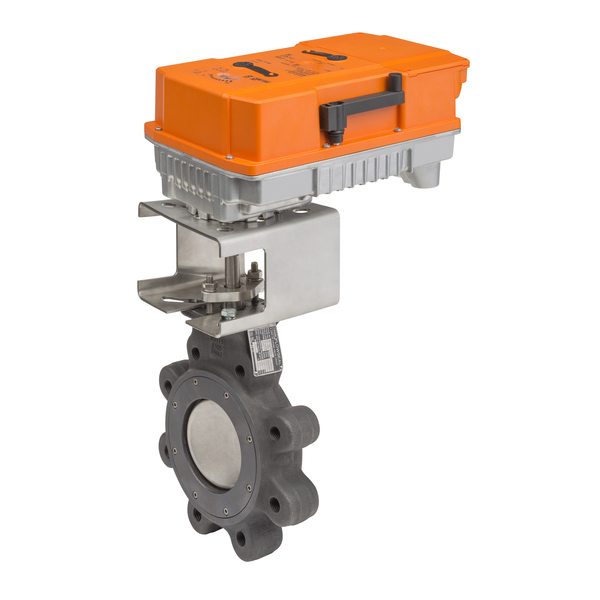
F680-150SHP+PRBUP-3-T
-

F665HD+AFRXUP-S
-

F6200-150SHP+SY4-110
-

F6150HD+PRXUP-3-T
-
F6150HD+PRBUP-3-T
-
F6125HD+PRBUP-3-T
-

F6125HD+HND02
-
F6100HD+DRCX24-3-T
-
F6100HD+DKRX24-MFT-T
Your #1 Source For Belimo HVAC Controls in New England
As the #1 Belimo Platinum distributor in New England, we know that getting the right parts fast is just as important as getting the right advice. We are a locally owned, family-operated business, which means you get competitive pricing, massive local inventory, and an experienced team that knows the industry. Contact us today and we will help you find the parts you need for your next project!