Extreme summer heat places an immense physical and thermal strain on your Building Automation System (BAS). If a single valve or damper actuator binds, locks up, or drifts out of calibration, your entire cooling sequence can fall apart in minutes. That is why understanding how to prevent actuator failure before the peak summer rush hits is the ultimate insurance policy for your building’s uptime, your energy bills, and your sanity.
Below, we break down the mechanical science of why high temperatures kill these critical components, the early warning signs to watch for during your walkthroughs, and a practical, field-tested guide to keeping your facility running cool when the pressure is on.
How Extreme Heat Can Damage Actuators
To protect your system, you first need to understand what happens to an actuator when the mercury rises. Actuators might look like simple plastic or metal boxes, but they are highly calibrated electromechanical devices operating under tight tolerances.
Ambient Temperature Thresholds
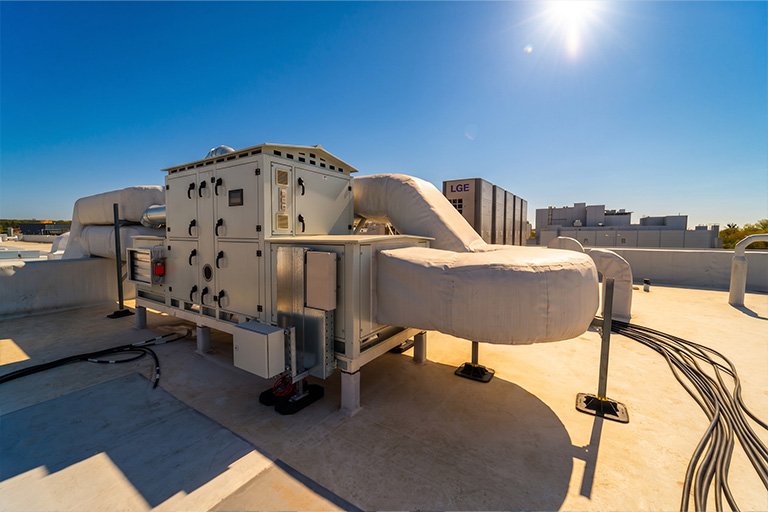
Most standard commercial actuators are rated for ambient operating temperatures up to 122°F (50°C). While a 95°F day in Boston or Providence might seem safely below that threshold, microclimates tell a different story. Actuators housed inside unconditioned mechanical rooms, crammed into tight ceiling plenums, or mounted on rooftop units (RTUs) under direct, baking sunlight can easily exceed 140°F.
Electronic Component Degradation
High heat is the natural enemy of electronics. Inside every electronic actuator is a circuit board and a series of capacitors. Prolonged exposure to elevated temperatures degrades these internal components, leading to erratic communication, intermittent signal loss, or total electronic failure. When the electronics fry, the actuator becomes a brick.
Mechanical Strain & Lubrication Breakdown
Inside the actuator housing is a gear train designed to multiply motor torque. These gears rely on specialized grease to prevent friction. When ambient temperatures soar, internal lubricants can dry out, solidify, or liquefy and run off the gears entirely. Without proper lubrication, friction spikes, internal gears strip, and the motor eventually burns out trying to overcome the resistance.
Thermal Expansion and “Hunting”
Different materials expand at different rates. In extreme heat, metal linkages and plastic gears expand unevenly. This can cause mechanical binding, forcing the actuator to work significantly harder. It also causes hunting—a state where the actuator constantly over-corrects back and forth because it cannot smoothly settle on its exact position setpoint.
Signs Your Actuators Are Feeling The Heat
You don’t have to wait for a total system failure to know your actuators are in trouble. Keep an eye out for these high-stakes red flags during your summer walkthroughs:
- Actuator Hunting: If you see or hear a device continuously oscillating back and forth without stopping, it’s unable to find its setpoint. This rapid movement quickly wears out the motor and strips gears.
- Sluggish Stroke Times: If a valve or damper actuator takes significantly longer than its rated speed (e.g., taking 3 minutes to move instead of its standard 90 seconds), internal friction or thermal binding is slowing it down.
- Position Feedback Errors: If your BAS triggers alarms because the actual physical position of the valve or damper doesn’t match the control signal, the actuator’s internal potentiometer or electronics are likely failing due to heat.
- Audible Grinding or Clicking: A noisy actuator is a dying actuator. Clicking or grinding indicates that gears are already stripped or structural binding is forcing the motor past its limits.
5 Proactive Tips to Prevent Actuator Failure
Preventative maintenance in late spring and early summer saves thousands of dollars in emergency contractor fees and tenant complaints later. Implement these five practical strategies to safeguard your components.
1. Audit NEMA Enclosure Ratings & Add Weather Shields
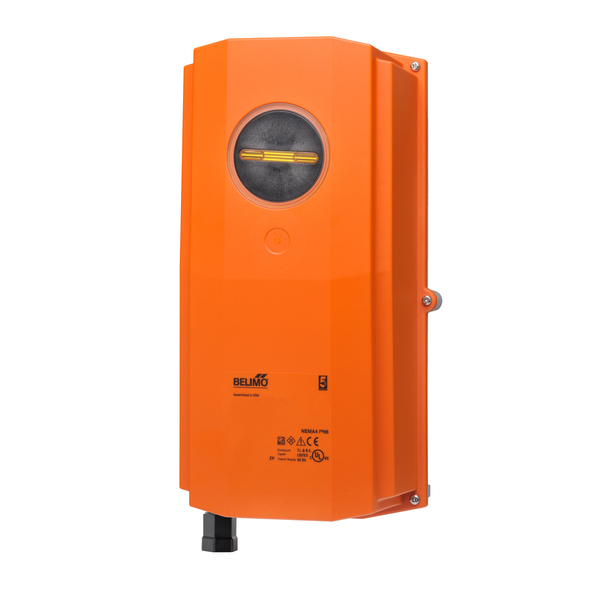
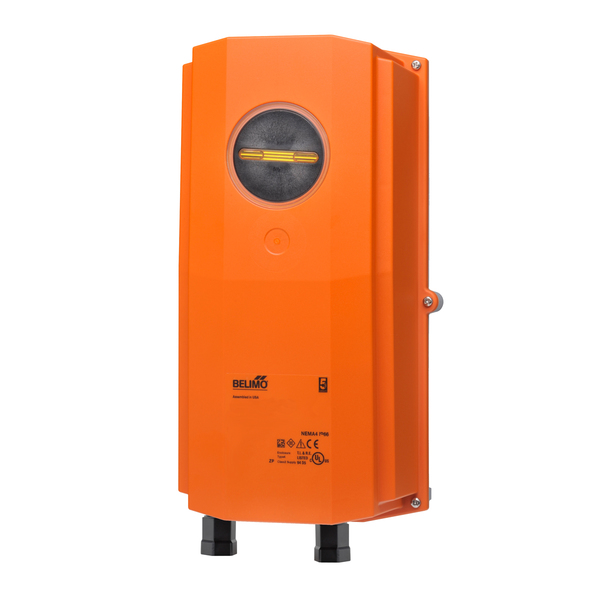
Standard, out-of-the-box actuators often feature a NEMA 2 rating, meaning they are only protected against light indoor dripping water. For outdoor applications, such as rooftop damper linkages or cooling tower bypass valves, ensure your actuators are housed in NEMA 4X weatherproof enclosures.
Additionally, consider installing dedicated metal sun shields. A simple aluminum or galvanized steel shield reflects direct solar radiation, drastically lowering the internal ambient temperature of the device.
NEMA 4X Rated Actuators



2. Conduct Full-Stroke Cycle Testing Before Heatwaves Hit
Don’t let the first 90-degree day be the first time your dampers open to 100%. Use your BAS to manually command your actuators to cycle completely from 0% to 100%. Full-stroke testing breaks up hardened grease, ensures the linkage moves smoothly through its entire range, and identifies sticky components before they are forced to run under maximum cooling load.
3. Monitor Voltage Drop and Electrical Loading
During peak summer, the local power grid faces massive demand, occasionally causing localized voltage sags or “brownout” conditions within industrial parks and commercial buildings. If a 24V (AC/DC) actuator drops down to 19V or 20V due to a voltage sag or an overloaded transformer, it must draw more current (amperage) to achieve its required torque. This extra current causes the internal motor to overheat dangerously. Verify your power supplies are stable and transformers aren’t operating at maximum capacity.
4. Inspect and Clean Linkages for Mechanical Resistance
Over time, dust, pollen, and scale buildup accumulate on valve stems and damper blades. This debris increases the torque required to move them. Clean these assemblies thoroughly and apply high-temperature, silicone-based lubricants to the linkages to reduce the mechanical workload on the actuator motor.
5. Verify Your Torque Margins
An actuator should never operate at the absolute ceiling of its torque rating. If a large outdoor air damper requires 130 in-lbs of torque to turn against high-velocity summer airflow, do not rely on a 133 in-lbs actuator. High temperatures reduce motor efficiency. Always leave a safe 20% to 30% torque buffer to handle unexpected mechanical resistance or extreme weather conditions.
Why Premium Components Matter: The Belimo Advantage
When you’re dealing with extreme environmental conditions, cheap hardware will cost you more in the long run. Investing in premium engineered components is the ultimate insurance policy for your facility’s uptime.
As New England’s #1 Belimo Platinum Distributor, we highly recommend looking closely at the engineering that goes into Belimo hardware:
- Brushless DC Motors: Unlike traditional brushed motors that generate substantial internal heat via friction, Belimo utilizes brushless DC motors. They run significantly cooler, draw less power, and feature an incredibly long operational lifespan.
- Electronic Overload Protection: Belimo actuators are smart enough to protect themselves. If a damper binds up due to heat expansion, the electronic overload protection safely stops the motor rather than letting it draw excessive current and burn out.